
WILLA SOURDOUGH STARTER DAILY FEEDING INSTRUCTIONS
- Prep time
- 24 hrs
- Yield
- 1 starter
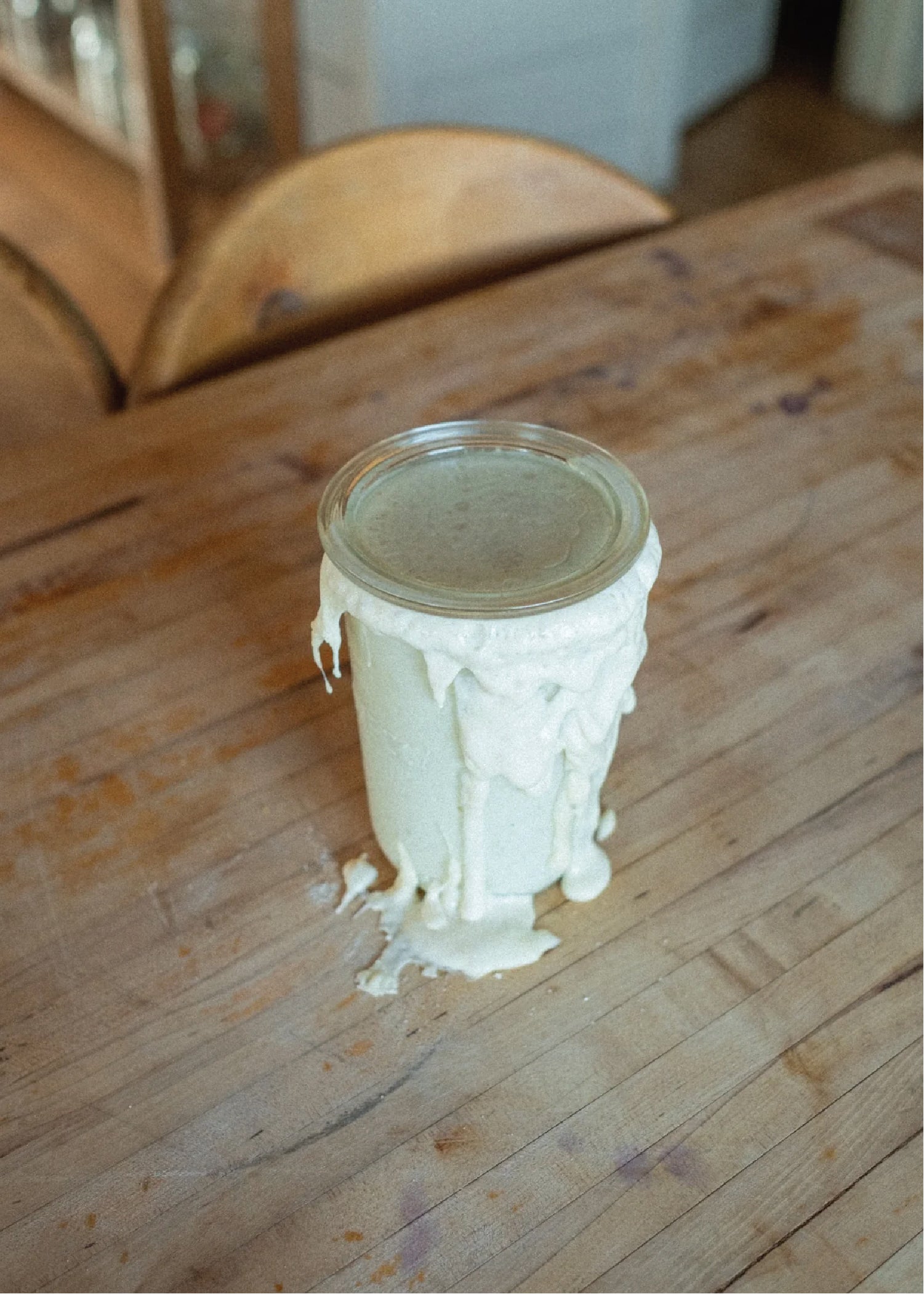
Sourdough starters are active organisms, meaning they need to be fed regularly to stay healthy. After each feeding, a mature starter will triple in volume within 12 hours, and begin to fall back down. When baking bread regularly, you should feed your starter every 24 hours, using the starter after it has reached peak activity but not yet fallen. We use the 2-jar method, meaning you only need 30 grams of starter for each feeding—plenty for baking bread—and will always have discard. There are countless sourdough discard recipes online, but we are partial to our Ballerina Farm sourdough pancakes, sourdough herb noodles, and sourdough granola (among many others).
WILLA SOURDOUGH STARTER DAILY FEEDING INSTRUCTIONS
Ingredients:
TOOLS
Directions:
- Place the sourdough starter and clean glass jar in front of you. Transfer 30 grams of the starter into the clean jar and discard the remaining starter mixture in the old jar (or use it to make sourdough pancakes, sourdough pasta, or sourdough granola).
- To the 30 grams starter, add 125 grams room-temperature water and mix well. Finally, add 140 grams flour and stir to combine.
- Cover the jar loosely with a lid (for example, if using a Weck jar, add the lid but do not secure with the latches). Store the jar at room temperature (72- to 76-degrees Fahrenheit / 22- to 24-degrees Celsius).
- Repeat this process daily, using the sourdough starter for bread baking after it has doubled or tripled in volume—anywhere from 4 to 6 hours after feeding, depending on the temperature of your home.
NOTES
*If your tap water comes from the city water supply, consider using filtered or bottled water to avoid traces of chlorine which may potentially damage your starter.
What happens if I don't discard some of my sourdough starter at every feeding?
Using this 2-jar method, you will always discard some starter, feeding only 30 grams of starter each day. If you do not get rid of a portion of your starter at each feeding, it will grow to massive quantities and require larger and larger amounts of flour and water. 30 grams of starter is the perfect amount if you are regularly baking sourdough bread.
What do I do with my sourdough discard?
There are countless ways to use your sourdough discard and prevent it from being wasted, including our sourdough granola, sourdough pancakes, sourdough herb noodles, sourdough tortillas, sourdough cornbread, and more. Store your sourdough discard in the fridge in an airtight container.
How long can I store my sourdough discard?
Sourdough discard is best used in recipes within 7 to 14 days of being discarded, as long as it has been properly refrigerated. However, if your starter is older than 6 months, it can last for months—even years—in the fridge due to its well-developed yeast and bacteria colonies. Do not use months-old starter in recipes, but you can use it to develop a new sourdough starter.
Can I keep my sourdough starter in the fridge?
Yes! Cold temperatures slow fermentation, and will extend how long your starter can sit between feedings. Let the starter fall back after peak fermentation, then cover with an airtight lid. You can keep your starter in the fridge for months, or even years if your starter is mature (older than 6 months). However, you must feed your starter once per week to keep it strong. When you are ready to bake with your dormant starter, the starter may require 2 to 3 daily feedings at room temperature before it resumes regular activity and is strong enough for making bread. To test your starter's strength, place a heap into a bowl of water. If it floats, it's strong enough to use in baking.
Can I use my refrigerated starter if it has a layer of dark liquid on top?
If your starter has been left in the fridge for a long time, it can develop a thick, dark layer of liquid on the top. This is normal, and the starter can be revived. Pour off the liquid layer, then feed as usual. Make sure to feed the starter consistently at room temperature for at least one week before baking bread or placing your starter back in the fridge. If there are ever any visible signs of mold on your starter, it must be thrown away.
Can I dispose of sourdough discard in the sink?
We do not recommend disposing of sourdough discard in the sink, as it dries and turns into a very firm, cement-like consistency. Instead, throw it away or add it to a compost pile.